


Syuppin Matcha
Nutty, dense, and sweet enough to drink at full strength — a matcha built for the preparation most powders cannot handle. Syuppin Matcha means "exhibition grade," and this line holds a Prix d'Argent from Paris. Whether you whisk it thin or knead it thick, the bowl stays smooth with no chalkiness and no bite.
What You'll Taste
Think warm roasted chestnut with a savory depth underneath. The powder whisks into vivid green with a sweet, grain-like scent, and the first sip lands smooth and full with an umami richness that coats the mouth. The nuttiness holds steady through the bowl as sweetness builds toward a long, soft finish — a grounding cup for mornings when you want focus and calm in the same sip.
Where It Grows
Zenjoji sits in Ujitawara, a valley along the Tawara River southeast of Kyoto and one of the oldest matcha-producing areas in Japan. At 200 meters, cool dawns and morning mist keep spring leaves tender and rich in the amino acids that give the cup its soft sweetness. The Nishide family workshop has refined Japanese tea here since the 1860s, buying raw leaf from local gardens and processing this May 2025 lot entirely in-house.
How It's Made
Before grinding, sorters remove leaf fragments and veins by hand so only flawless material reaches the stone mill. The cultivar is Samidori, a classic Uji variety prized for shaded matcha. First-flush leaves spend about thirty days under canopy shade to concentrate umami, then go through slow granite milling in Kyoto at a pace that protects color, aroma, and the powder's clean dissolve.
Thirty grams is about fifteen bowls of thin matcha, or seven thick ones — enough to know whether exhibition grade changes your morning. If you already drink matcha and want the step up, start here.
Brewing
Sift the powder through a fine strainer before preparing either way. For usucha (thin), whisk 2 grams briskly in a warm bowl with 60 ml of 80°C water and a bamboo chasen until a fine foam forms. For koicha (thick), knead 4 grams into 30 ml of 80°C water slowly until the texture turns smooth and syrupy.
FAQ
What is koicha?
Koicha means "thick tea," a concentrated preparation where matcha far outweighs the water and the texture turns syrupy. Because that density magnifies every flaw, only high-grade matcha works at this ratio. Lower grades turn harsh and chalky when prepared this way.
How is Syuppin different from Tokusei?
Syuppin is nuttier and deeper, with a long soft finish from single-cultivar Samidori leaf that is hand-sorted before milling. Tokusei Matcha is creamier and more grassy, blending Okumidori and Samidori. Both come from the same Ujitawara workshop.
Do I need a bamboo whisk?
A bamboo chasen gives the best results. Its flexible tines reach the bottom of the bowl and break up clumps that other tools miss, producing smoother foam in usucha and an even paste in koicha.
How should I store matcha?
This lot arrives in a factory-sealed bag inside a metal tin. Open the inner bag and transfer the powder into the tin when it arrives. Keep it sealed and away from light and heat, and use within a few weeks of opening for the brightest color and flavor.
Smooth, earthy and nutty deep taste - amazing palette for koicha. A great taste experience.
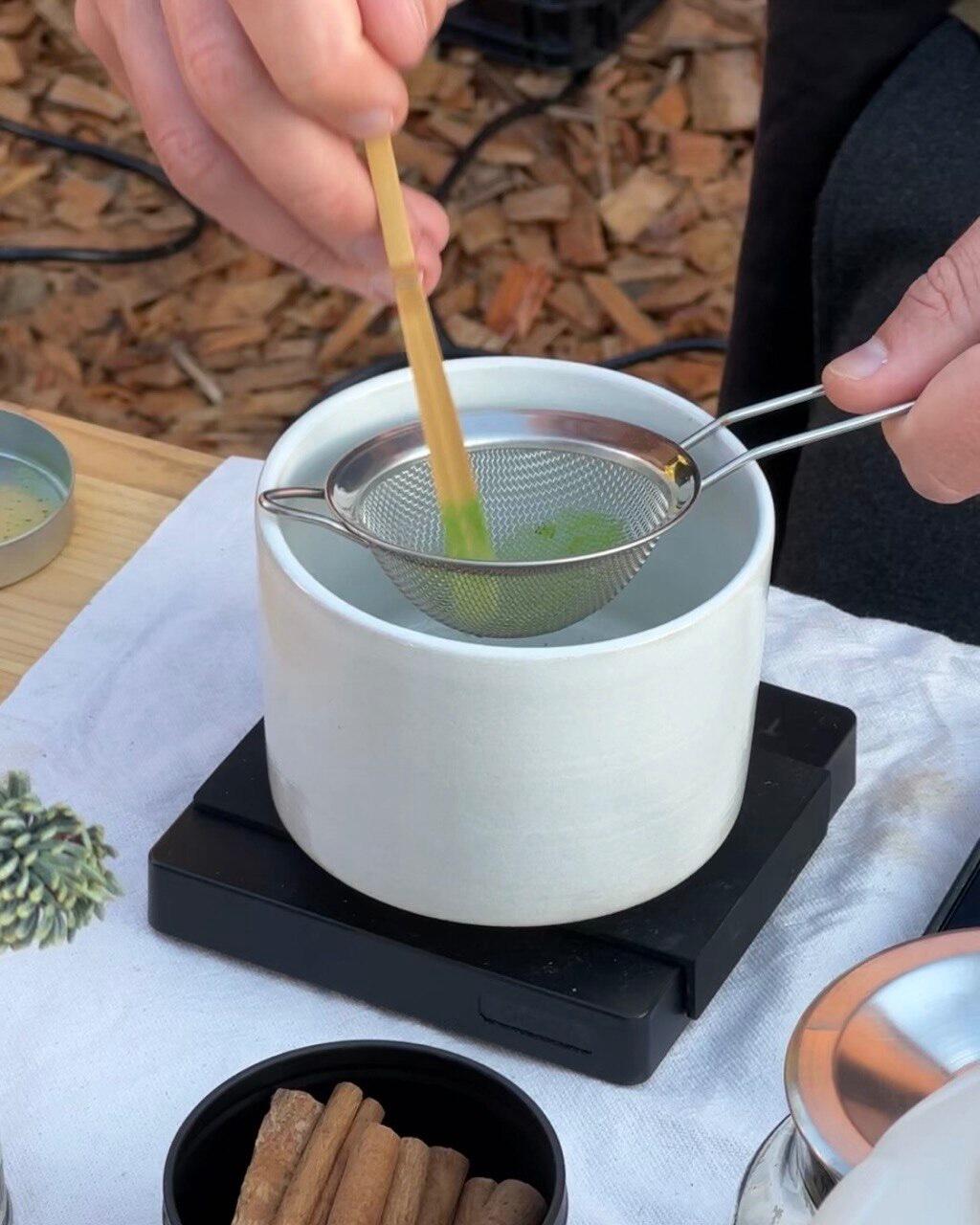
Picked this up out of curiosity, and it’s genuinely solid. The powder is very fine and behaves well - no clumping, easy to whisk into a smooth, tight foam.
Aroma is clean, slightly sweet, and a bit creamy. In the cup, it’s mostly about umami, with a soft sweetness and a light, chestnut-like note, then a smooth, lingering finish - no rough edges or bitterness.
Also pleasantly surprised by the price for this level - feels like a very good value. Would happily keep this in rotation.